
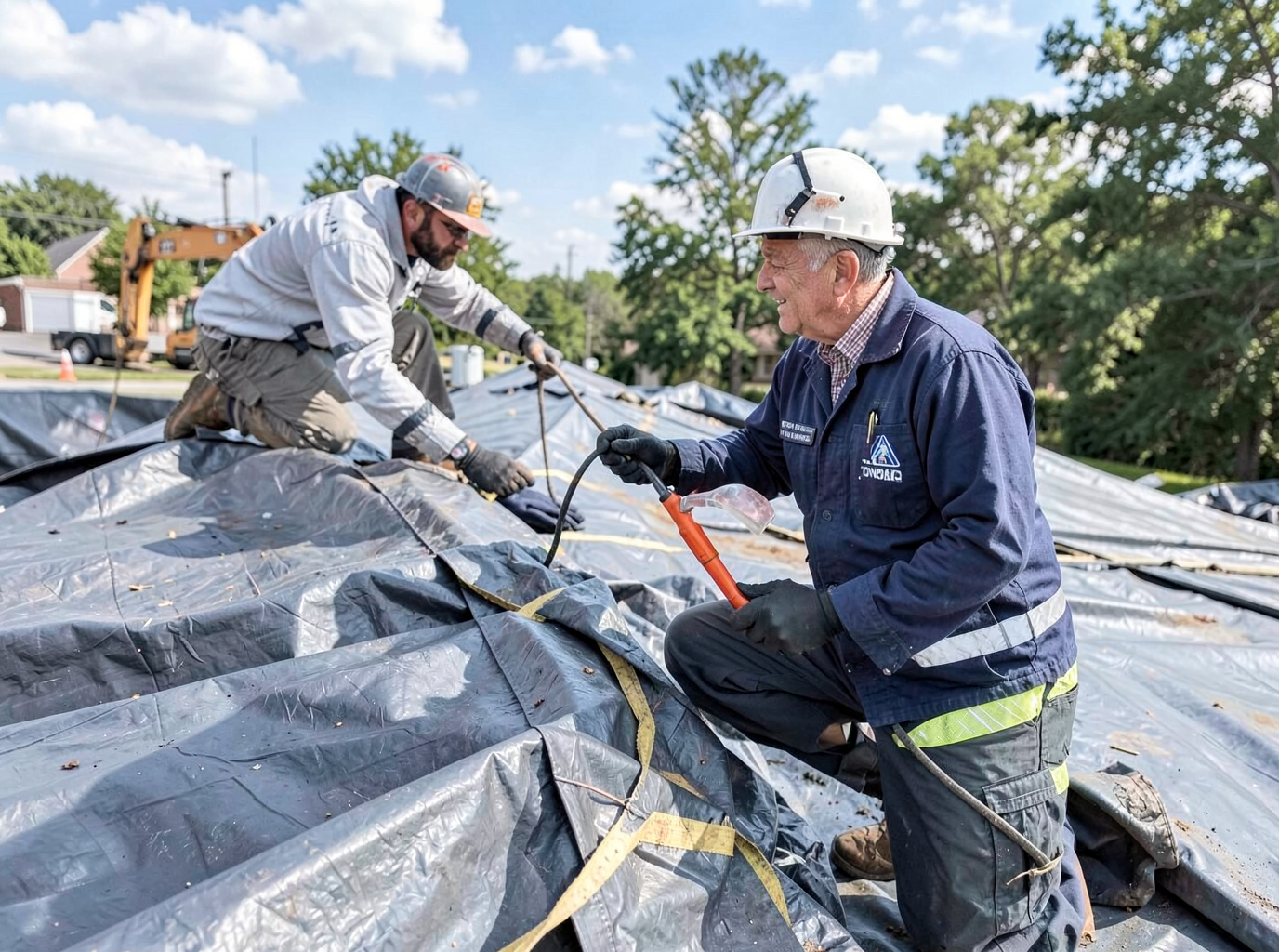
In Craighead County the humid subtropical climate brings intense summer thunderstorms that can strip shingles or split seams on homes built decades ago in West Jonesboro and University Heights. A properly installed tarp must account for the expansion and contraction that occurs when daytime heat spikes and evening humidity lingers, or seams will pull away within days. Crews working near Jonesboro Municipal Airport also watch for sudden wind shifts that funnel across open fields and test every anchor point.
Older housing stock around Downtown Jonesboro often features steeper pitches and brittle asphalt shingles that tear under foot traffic during an install. Tarps rated for at least 10 mil thickness with reinforced grommets are standard, yet crews still add extra furring strips along valleys to prevent pooling when heavy rains return within the same week. Access routes through narrow alleys or near Craighead Forest Park tree lines can add time and require smaller equipment to avoid damaging landscaping.
Homeowners in Paragould frequently call after the same frontal systems hit Jonesboro, but local crews know the soil saturation here holds moisture longer and increases attic humidity under a tarp. Leaving a tarp in place past the initial repair window risks mold growth inside the structure, especially on mild winter days when ventilation is reduced. Every job includes a follow-up visit to check tension before the next weather system moves through.
Technician insight
In Jonesboro the thing that catches most people out with Emergency Roof Tarping is how quickly humidity builds under the tarp on mild winter days, especially on the older unvented attics found throughout West Jonesboro; if you do not add a small ridge vent opening the moisture stays trapped and turns into mold before the permanent fix is done.
West Jonesboro wind damage
A sudden thunderstorm tore shingles on a single-story home near Craighead Forest Park. The crew found water already tracking into the attic along a valley. They installed a 10-mil tarp with extra perimeter strapping and returned after the next rain to confirm no new intrusion.
Emergency Roof Tarping Services We Offer
✓Storm Damage Tarping
Immediate coverage after hail or wind events common in Craighead County to stop water entry until permanent repairs can be scheduled.
✓Leak Containment Tarping
Targeted tarping over active leaks in University Heights homes to protect interiors while owners arrange full roof replacement.
✓High Wind Secure Tarping
Extra strapping and perimeter anchoring suited to open terrain near Jonesboro Municipal Airport where gusts frequently exceed standard installations.
✓Tree Fall Emergency Tarping
Rapid response after limbs from Craighead Forest Park edges damage roofs in West Jonesboro, preventing further intrusion until debris removal.
✓Temporary Commercial Tarping
Larger reinforced systems for low-slope buildings near Arkansas State University campus when sudden leaks threaten operations.
Emergency Roof Tarping Cost in Jonesboro, AR
| Service | Typical Range | What Affects It |
|---|---|---|
| Single-story residential tarp | $350–$650 | Size and access in West Jonesboro or University Heights affect final cost |
| Two-story residential tarp | $550–$950 | Extra labor and equipment for steeper pitches common in older Downtown homes |
| Follow-up tension adjustment | $125–$200 | Required after strong winds or additional rain |
Ranges are typical for Jonesboro, AR and confirmed with an exact written quote before any work starts.
How it works
- 1
On-Site Assessment
Crew inspects damage from the ground and attic, notes roof pitch, and checks for hidden issues common in older Craighead County homes.
- 2
Material Selection
Choose thickness and size based on weather forecast, wind exposure near the airport, and how long the tarp must remain in place.
- 3
Secure Installation
Anchor tarp with furring strips and straps rated for local wind loads, paying special attention to valleys and edges on steep Downtown Jonesboro roofs.
- 4
Follow-Up Check
Return within 48 hours to verify tension and adjust for any new weather systems moving through the region.
Pricing
Upfront quotes given during Mon–Fri 8am–6pm or Sat 9am–2pm visits.